
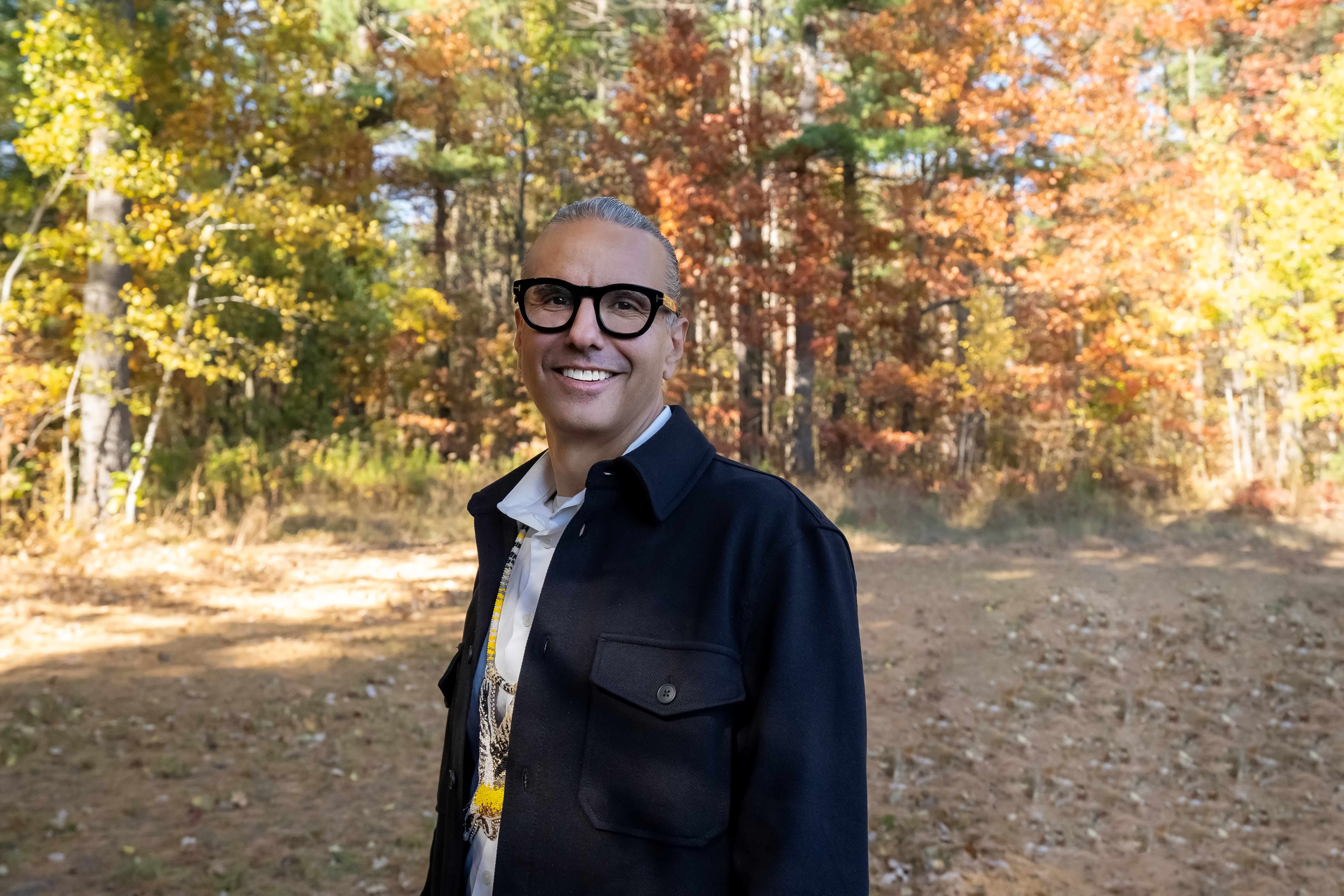
Photo by Nedahness Greene, courtesy of Anton Treuer
What role did music play historically in Native American culture, and in what ways has this changed or remained the same? How have Native musicians influenced modern music? Dr. Anton Treuer, author of “Everything You Wanted to Know About Indians But Were Afraid to Ask,” shares powerful insights into the deep connection between music, tradition, and resilience in Native communities. From ceremonial drums to modern fusion, discover how these rhythms carry stories, heal, and inspire across generations. Join us for an exploration of music’s enduring legacy and its impact on Native identity.
Guest
I’m delighted to have a fellow Minnesotan as my guest today. Dr. Anton Treuer is Professor of Ojibwe at Bemidji State University. He has presented internationally on topics related to Tribal Sovereignty, History, Language, and Culture. Dr. Treuer has won numerous awards and written many books, including Everything You Wanted to Know About Indians But Were Afraid to Ask. That particular book is also available in a Young Readers Edition. I’m thrilled to have him join us today to talk about the role of music in Native American culture.

Notes
We discuss:
- What role has music played in traditional Native American life? How has that changed or remained the same today?
- Benefits of tribal music.
- Why should tribal languages and music be important to non-Natives?
- How have Native musicians and music influenced mainstream popular music?
- How can we honor Native Americans in our observance of the US Thanksgiving holiday? Are there certain traditions or elements of this holiday celebration that tend to be problematic or offensive to Native Americans, and others may not realize it? Or myths that are embedded in this holiday that you want to dispel for listeners?
- Some of Mindy’s favorite quotes from Everything You Wanted to Know About Indians But Were Afraid to Ask:
- “Supporting tribal language and culture also involves taking a good hard look at one’s self and community. This dynamic is especially challenging, because it is language and culture revitalization that offer our greatest opportunities for strengthening political, economic, educational, and community health.”
- “[T]here are the proven links between academic achievement and cultural and linguistic competency for Native youth. These show that everyone should want the most successful strategies employed to bridge the educational and economic achievement gaps for Indians, so that Natives can be the best possible neighbors and need fewer entitlements to deal with poverty, reducing the tax burden for all. But even more important, the survival of tribal languages and cultures is a test for the morality of our nation and its ability to provide for the needs of all of its citizens.”
- “Most human beings are terrified of offending others or being accused of racism. Sometimes it seems safer and easier not to teach about Indians, not to learn more and more deeply about Indians, and not to advocate for change. But Edmund Burke had it right: ‘All that is necessary for evil to triumph is for good men to do nothing.’ So, don’t imagine Indians, understand them. Keep asking questions, reading, listening, and advocating for change. Don’t tolerate stereotypes, and don’t be afraid to ask everything you wanted to know about Indians. And if you’re Native, give a meaningful response to those questions rather than an angry rebuke.”
Connect/Other Resources
- Dr. Treuer’s website
- Twitter: @antontreuer
- Facebook: Anton Treuer
- Linked In: Anton Treuer
- Dr. Treuer’s books include:
- Everything You Wanted to Know About Indians But Were Afraid to Ask (also available in a Young Readers Edition)
- Where Wolves Don’t Die
- The Indian Wars: Battles, Bloodshed, and the Fight for Freedom on the American Frontier
- The Assassination of Hole in the Day
- Warrior Nation: A History of the Red Lake Ojibwe
- The Cultural Toolbox: Traditional Ojibwe Living in the Modern World
- The Language Warrior’s Manifesto: How to Keep Our Languages Alive No Matter the Odds
- Anton mentions:
- Rumble: The Indians Who Rocked the World
- Native authors Louise Erdrich and Angeline Boulley
- The show Reservation Dogs
- Related news:
- November is Native American Heritage Month
- The Understand Native Minnesota campaign is donating 10,000 copies of Dr. Treuer’s “Everything You Wanted to Know” book to middle school and high school teachers and schools. Learn more about the One Read program and find links to educator guides. Read this Star Tribune editorial about the One Read program.
- Medicaid will cover traditional healing practices for Native Americans in 4 states (NPR 10/19/24) “[F]or the first time, Medicaid in California, Medi-Cal, as well as in Arizona, New Mexico and Oregon, is set to cover traditional health practices such as music therapy, sweat lodges, and dancing to help with physical and mental health.”
Other episodes we mentioned or that you may enjoy:
- Ep. 7: Sound of Your Heritage: Music’s Role in Jewish Culture & Celebrations (Hazzan Alisa Pomerantz-Boro)
- Ep. 25: Role of Spirituals within African American Culture, with award-winning musician and educator Bruce Henry
- Ep. 134: How did music shape the exploration and settling of America’s west? The musical story within the Westward Expansion story; with author Laura Dean
- Ep. 117: Sound of Your Heritage: What role does music play in Norwegian culture & celebrations? With Melissa Holm-Johansen, DMA
- Ep. 41: Celebrate Cinco de Mayo with a look at how music preserves Mexican heritage and connects cultures, with Eugene Rodriguez
- Ep. 81: MIM – A place that showcases music’s unique ability to both preserve diverse cultures AND bring those cultures together; with Katherine Palmer, DMA
- View all episodes related to Education & Community
In-Episode Promo
JAMBAR: If you’re a regular listener of this show, you know that my favorite energy bar is JAMBAR. One thing I love about JAMBAR is that the four original flavors are separate and distinct — unlike some bars, whose different flavors seem to all taste the same, there is no flavor fatigue with JAMBAR. (This was especially helpful when we moved recently and were eating them even more than usual!) I love all the flavors, so it took a while for me to settle on my favorite; just as I decided Musical Mango was my favorite, JAMBAR came out with a fifth flavor, Tropical Trio. This bar is like taking your taste buds on an exotic island escape, and it’s definitely right up there with Musical Mango as my favorite. These Certified Organic whole food bars are non-GMO and gluten-free; and include vegan, dairy-free options. Support your active life – and your tastebuds – with JAMBARs. Available at Amazon, select retailers, and jambar.com.
Coda
Dr. Treuer shares about his collaboration with Thomas X, providing the Ojibwe translation and voice for Rezolution:
Closing Words
And that is Dr. Treuer’s voice on the intro to Rezolution, his collaboration with Thomas X. You can view the translation and full YouTube video in the show notes.
I watched the documentary that Anton recommended – Rumble: The Indians Who Rocked the World – and it was fantastic. It was available on Amazon and it was fascinating to learn about the musical contributions of indigenous artists and how they influenced pop culture and music. Anton mentioned Jimi Hendrix and Link Wray; they’re definitely featured in the documentary as well as the Neville Brothers. I’m a huge Aaron Neville fan, and didn’t realize the brothers had Native American heritage; so that was especially interesting for me to hear about. Other Native musicians worked with (and highly influenced) Rod Stewart, Ozzy Osbourne, Jackson Browne, and John Lennon, among others.
Another thing Anton mentioned was that 87% of the educational standards in the US that mention Native people are stories from before 1900. There is currently a campaign called Understand Native Minnesota that is donating 10,000 copies of Anton’s “Everything You Wanted to Know” book to middle school and high school teachers and schools. If you’d like to get this book in your school or want to learn more about the program or find links to educator guides, just go to the show notes.
I hope this episode leaves you feeling inspired to learn more about and honor the indigenous people and history and culture and music in your area; to honor them in your Thanksgiving celebrations if you’re in the US; and to utilize music to transcend divisions and find oneness and areas of commonality with your fellow homo sapiens. In the spirit of Thanksgiving, I thank all of you for joining me on this journey of making life better – individually and communally – through the power of music.

You can always connect with me on email (mindy@mpetersonmusic.com), Facebook, Instagram, Twitter, or LinkedIn.
Thank you so much for joining me today. Until next time, may your life be enhanced with music.
If you enjoyed this episode, please:
- Follow us in your podcast app: This is FREE and conveniently delivers each new episode to your device when it releases, so you don’t have to search for it.
- Share us with others: If you know of someone who would enjoy this episode, please share it with them! It’s easy to do right in your podcast listening app. Just tap the Share feature for options to share by text, email, or social media (or share this page).
- Rate & review our show: This fuels our creative energy, and also helps others find the show!
Note: We occasionally use affiliate links for products and services we whole-heartedly believe in. We may receive a small commission, at no extra cost to you, for purchases made through these links. This helps support the free content we provide.
One response to “Ep. 196: The Beat of the Land – Music’s Role in Native American Culture and Identity; with Anton Treuer, PhD”
[…] Ep. 196: The Beat of the Land – Music’s Role in Native American Culture and Identity; with Anton… […]