
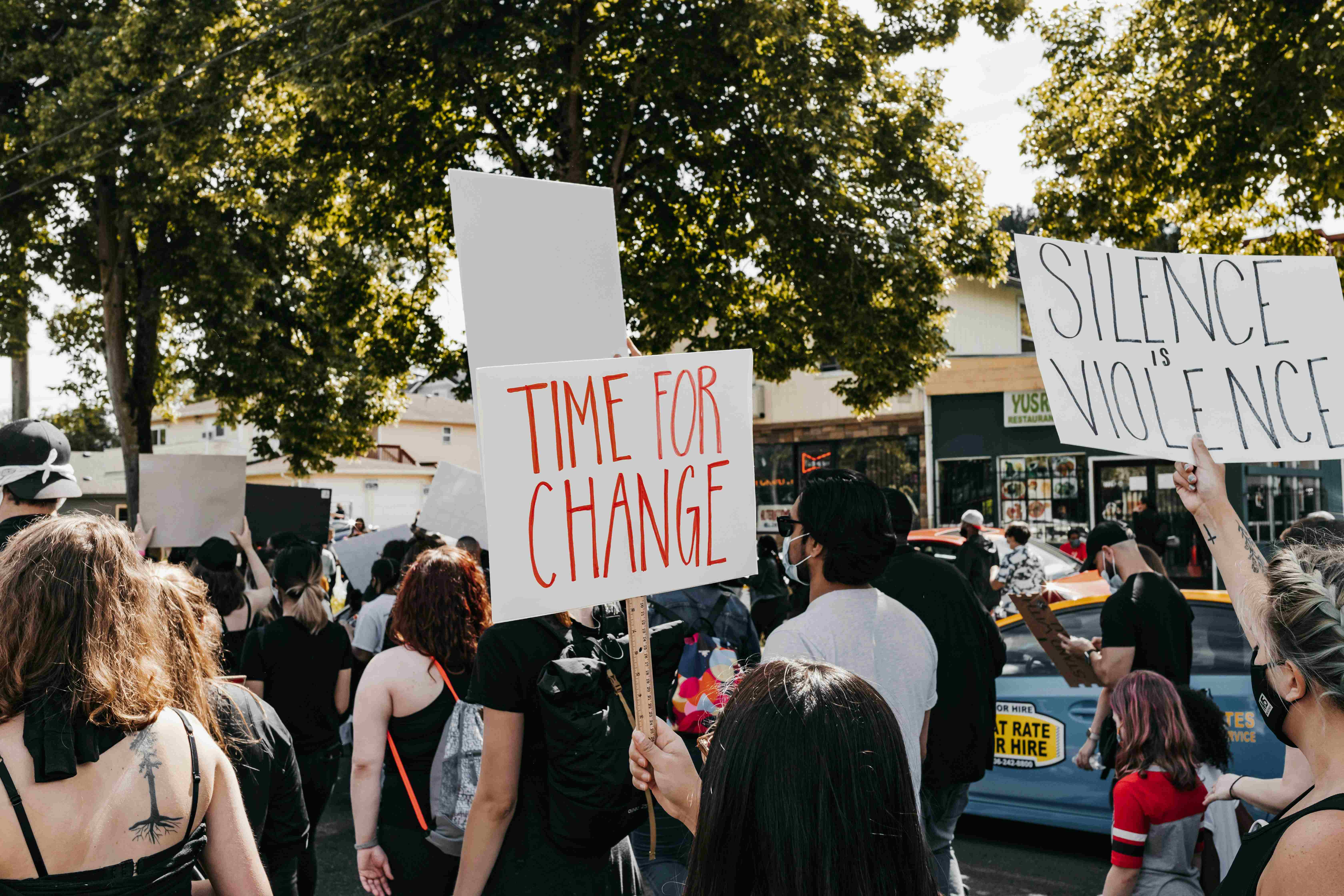
Photo by Duncan Shaffer on Unsplash
What happens when a song becomes political? From Minneapolis to Northern Ireland to South Africa, music has long been a powerful political force. In this episode, we talk about protest songs, cultural influence, and why music continues to shape political discourse across borders.
I’m Mindy Peterson, host of Enhance Life with Music podcast, where we explore the ways music transforms everyday life. And this is Microhance, a micro-dose of musical enhancement.
Less than a week ago, Bruce Springsteen released a brand new song called “Streets of Minneapolis,” a protest song in response to ICE activities in Minneapolis and the resulting deaths of two US citizens. All of these events hit close to home for me, since the Minneapolis metro area has been my home for 25 years. And when I saw that Springsteen had released this song, I immediately thought of a quote from my favorite book on politics. The quote is: “…[S]uccessful movements to advance civil rights for historically marginalized groups relied not just on political action. Music, culture, art, television, churches, neighborhood groups, and volunteer organizations have played instrumental parts in bringing about change.” This is from the book I Think You’re Wrong (But I’m Listening), by Beth Silvers and Sarah Stewart Holland.
The song released on Wednesday, January 28, 2026. By Friday morning, January 30th, “Streets of Minneapolis” occupied the No. 1 position on the iTunes Top Songs chart – not just in the US but in 19 countries. The song also reached #1 on other international charts. That night, January 30th, Springsteen performed the song in Minneapolis at the iconic First Ave.
Regardless of your views on the events taking place in Minneapolis, this song is a prime real-life example of the role music can play – and its power – in culture and enacting change; a reminder that, while politicians and elected officials do have powerful roles, they are not the only channel to bring about change.
With “Blowin’ in the Wind,” Bob Dylan posed moral questions that resonated deeply with the civil rights movement and forced listeners to sit with the gap between American ideals and reality.
A few years later, Marvin Gaye’s “What’s Going On” turned that approach inward. Written from the perspective of a Vietnam veteran returning to a fractured nation, the song was inspired by his own brother’s experiences coming home from combat. It was a socially conscious plea for peace and understanding, for society to move forward beyond hatred.
And this power of music to shape political consciousness isn’t limited to the United States.
In 1983, U2 released “Sunday Bloody Sunday,” a response to the violence of The Troubles in Northern Ireland. The song didn’t try to resolve the conflict or pick easy sides. Instead, it demanded that listeners bear witness – to grief, to anger, and to the human cost of political violence.
In South Africa, music became a tool of global resistance. Songs calling for Nelson Mandela’s release turned him from a political prisoner into an international symbol, helping sustain worldwide pressure on the apartheid regime.
Across borders and regimes, music has often bypassed censorship and mobilized international solidarity. It’s a way of grappling with conflict in real time – not offering neat answers, but insisting that we pay attention.
Sometimes, protest songs have been so politically charged – and effective – that governments have tried to silence them outright. Songs have been banned. In parts of the Middle East and North Africa, artists have been arrested, imprisoned, even tortured for music that called for leadership change. And in many cases, those attempts to suppress the message only made the songs more powerful – spreading them further and deepening their impact.
Each of these songs became more than just music – they became cultural touchstones that helped shape public consciousness and move social movements forward. They give voice to collective emotion, capture moments that statistics can’t, and help frame social and political discourse in ways speeches alone never could.
The next time you hear one of these songs – or any song that makes you think about a social or political issue – pause for a moment. Be aware of its impact and appreciate the role music plays in not just reflecting history, but helping shape it, by capturing events, putting form to emotions, and igniting conversations we have long after the song ends.
I’m Mindy Peterson, and I hope this inspires you to enhance your life with music.
In-Episode Promo
BRAIN.FM If you’ve ever struggled with sleep, focus, or even just winding down at the end of the day, you’ll want to check out Brain.fm. Their tagline is “Music Powered by Science” – and that’s not just marketing. Brain.fm uses scientifically designed functional music that’s engineered to influence brain activity for focus, relaxation, and sleep – helping you fall asleep faster, stay asleep longer, and boost productivity when you’re awake.
Unlike Spotify or YouTube focus playlists or white noise, Brain.fm’s music is backed by patented audio technology that increases blood flow to brain regions associated with focus and flow state. There’s even a specialized feature to support focus for people with ADHD in a nonpharmacological way.
Personally, I’ve been using Brain.fm for over a year and absolutely love it! I listen to it it every night while I unwind before bed, and it makes a huge difference in getting into a relaxed mode where I’m perfectly prepped to ease into sleep. Focus is less of a challenge for me, but whenever I find myself in the middle of noise I can’t control, I just pop in earbuds, turn on Brain.fm’s focus music, and let the magic happen.
Learn more at Brain.fm or in Episode 203. And try Brain.fm for yourself with a FREE 30-day trial by going to brain.fm/enhance (no credit card required). Links are in the show notes.
If you enjoyed this episode, please:
- Follow us in your podcast app: This is FREE and conveniently delivers each new episode to your device when it releases, so you don’t have to search for it.
- Share us with others: If you know of someone who would enjoy this episode, please share it with them! It’s easy to do right in your podcast listening app. Just tap the Share feature for options to share by text, email, or social media (or share this page).
- Rate & review our show: This fuels our creative energy, and also helps others find the show!
View all Microhance episodes
Note: We occasionally use affiliate links for products and services we whole-heartedly believe in. We may receive a small commission, at no extra cost to you, for purchases made through these links. This helps support the free content we provide.
One response to “Micro 53: The Power of Music in Political Discourse”
[…] Micro 53: The Power of Music in Political Discourse […]