
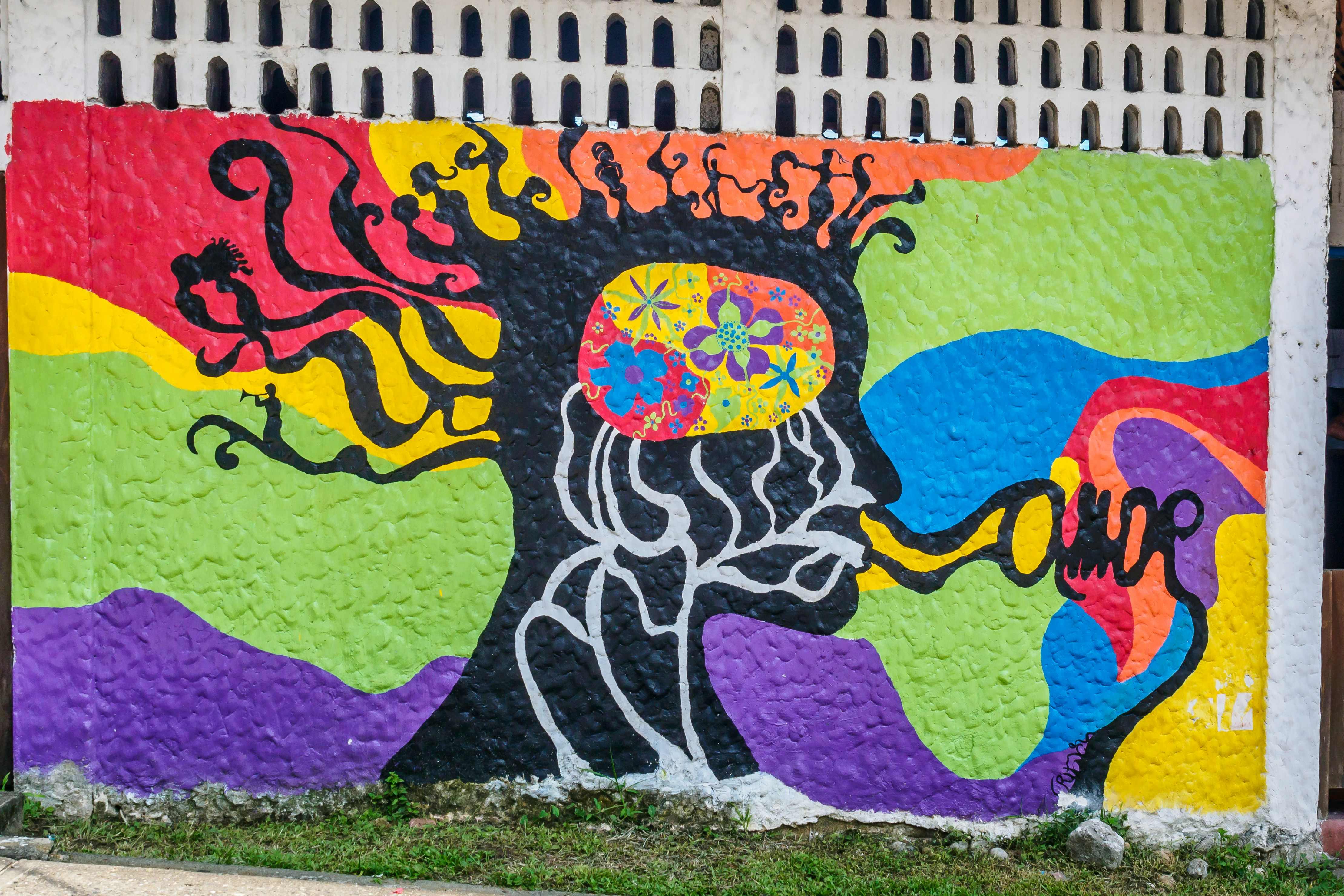
Photo by Alexander Schimmeck on Unsplash
Mental health struggles have become part of everyday life for many of us, and we’re increasingly searching for approaches to healing that go beyond medication alone. In this episode, we explore groundbreaking research from Yale University showing how music-making may help reduce paranoia, hallucinations, and social isolation in people experiencing psychosis. Even if you’ve never encountered psychosis firsthand, this fascinating conversation offers powerful insights into how music shapes the brain, strengthens human connection, and may hold untapped potential for mental health and healing.
Guest
Joining me today is the senior author of the Yale study, Dr. Philip Corlett, and the project’s music facilitator, Adam Christoferson. Dr. Corlett is an associate professor of psychiatry and psychology at Yale University, and director of its Belief, Learning, and Memory Lab. Adam is a singer-songwriter and the founder and executive director of Musical Intervention, a Connecticut-based nonprofit and creative studio that uses music-making as a tool for mental health recovery, connection, and community transformation. He’s also the winner of ABC’s Claim to Fame Season 3!

Notes
We discuss:
- The medications we currently have available are only able to help about 50% of people experiencing psychosis, prompting interest in healing approaches that extend beyond medication alone.
- The specific language pattern to watch for that indicates social isolation. (Fun fact: This language pattern is also a predictor used in speed dating sessions!)
- What is predictive coding, why it’s so important, and why music is uniquely equipped to regulate it.
- How a Yale University psychiatry researcher became inspired to study music’s impact on psychosis.
- How music-making sessions helped participants express emotions, connect with others, and “come alive” in ways traditional treatments often struggle to achieve.
- Music-making may create lasting changes in brain circuitry, potentially retraining dysfunctional prediction systems over time.
- The broader implications of this research for mental health, neuroscience, community building, and our understanding of why music is such a powerful force in human life.

Connect/Other Resources
- Read more about the research: Music Corrects the Brain’s “Glitched” Predictions
- Dr. Philip Corlett is director of Yale University’s Belief, Learning, and Memory Lab
- Adam Christoferson is Founder & Director of Musical Intervention
- NBC Connecticut overview of Musical Intervention:
- Adam’s TEDx Talk:
Other episodes we mentioned or that you may enjoy:
- Ep. 205: Music as a Tool for Suicide Awareness, Prevention, and Intervention; with Bryan Kohl
- Ep. 179: How We Human – Fostering mental wellbeing specifically for creatives; with Tasha Golden, PhD
- Ep. 173: From founding drummer in Maroon 5 to mental health advocate – Ryan Dusick’s journey through struggle to connection and purpose
- Ep. 29: Music tech interventions for mental health challenges (with staggering success rates), with Noise Solution’s Simon Glenister
- View all episodes related to Education & Community and Science & Health
In-Episode Promo
BRAIN.FM If you’ve ever struggled with sleep, focus, or even just winding down at the end of the day, you’ll want to check out Brain.fm. Their tagline is “Music Powered by Science” – and that’s not just marketing. Brain.fm uses scientifically designed functional music that’s engineered to influence brain activity for focus, relaxation, and sleep – helping you fall asleep faster, stay asleep longer, and boost productivity when you’re awake.
Unlike Spotify or YouTube focus playlists or white noise, Brain.fm’s music is backed by patented audio technology that increases blood flow to brain regions associated with focus and flow state. There’s even a specialized feature to support focus for people with ADHD in a nonpharmacological way.
Personally, I’ve been using Brain.fm for over a year and absolutely love it! I listen to it it every night while I unwind before bed, and it makes a huge difference in getting into a relaxed mode where I’m perfectly prepped to ease into sleep. Focus is less of a challenge for me, but whenever I find myself in the middle of noise I can’t control, I just pop in earbuds, turn on Brain.fm’s focus music, and let the magic happen.
Learn more at Brain.fm or in Episode 203. And try Brain.fm for yourself with a FREE 30-day trial by going to brain.fm/enhance (no credit card required). Links are in the show notes.
Coda
Adam recommends: If you have writers block, write WITH someone else!

Closing Words
Thank you so much to Adam and Phil for joining us today and for all they do to enhance lives with music through their research, songwriting, and other work. I hope you found this conversation as fascinating and eye-opening as I did! It was incredible to learn how music can complement traditional treatments for psychosis – not only helping reduce symptoms like paranoia and hallucinations, but also retraining the brain’s prediction systems in ways that medication alone may not accomplish.
I certainly feel a deeper appreciation for the challenges faced by people living with psychosis, whether it’s the person with a diagnosis, their loved ones, or people like Adam and Phil who are finding new ways to bring healing and connection to these folks.
Also, I’ll be paying more attention to the pronoun patterns that I hear around me – and that I use: the balance between “I,” “me,” and “mine” versus “we,” “us,” and “ours.” It’s fascinating to think that something as simple as these wording choices can offer clues about how connected – or disconnected – we feel from the people around us.
And this conversation is yet another reminder of music’s remarkable ability to shape our brain circuitry. Whether you’re singing in a choir, playing an instrument, writing songs, or simply sharing music with others, you’re doing more than making sound – you’re strengthening neural pathways, building connections, and helping your brain make sense of the world.
And if you know of someone who would enjoy this episode, please share it with them! It’s one of the best ways to help us reach new listeners and spread the transforming power of music in everyday life.
You can always connect with me on email (mindy@mpetersonmusic.com), Facebook, Instagram, X, or LinkedIn; and by signing up for my occasional e-Newsletter.
Thank you so much for joining me today. Until next time, may your life be enhanced with music.

If you enjoyed this episode, please:
- Follow us in your podcast app: This is FREE and conveniently delivers each new episode to your device when it releases, so you don’t have to search for it.
- Share us with others: If you know of someone who would enjoy this episode, please share it with them! It’s easy to do right in your podcast listening app. Just tap the Share feature for options to share by text, email, or social media (or share this page).
- Rate & review our show: This fuels our creative energy, and also helps others find the show!
Note: We occasionally use affiliate links for products and services we whole-heartedly believe in. We may receive a small commission, at no extra cost to you, for purchases made through these links. This helps support the free content we provide.