
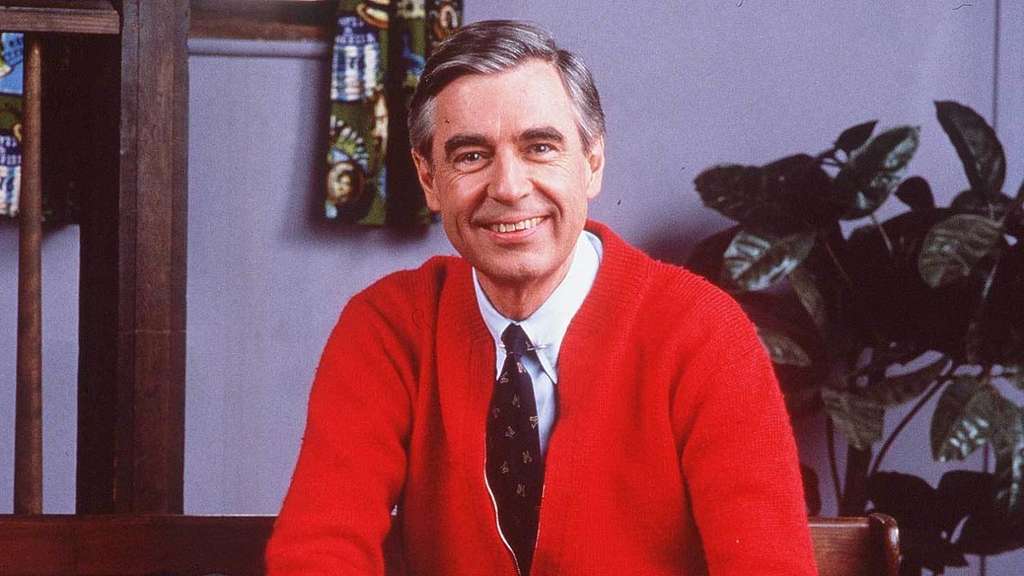
Image Public Domain via Get Archive LLC
How did music shape Fred Rogers into the beloved host of Mister Rogers’ Neighborhood? Discover the remarkable story behind his lifelong relationship with music and the piano that changed his life – and why music doesn’t just enrich our lives, it equips us for life.
I’m Mindy Peterson, host of Enhance Life with Music podcast, where we explore all the ways music can make our lives better. And this is Microhance, a micro-dose of musical enhancement.
Today’s Microhance is inspired by an excellent biography I just finished reading on Fred Rogers, called “The Good Neighbor,” by Maxwell King. While most of us know Fred Rogers as the beloved host of Mister Rogers’ Neighborhood, not everyone realizes he was also an ordained Presbyterian minister and an accomplished musician. In this biography, King leaves no doubt that music wasn’t just one of Rogers’ interests – it was central to his identity and to everything he accomplished.
King points to music as a key element in Rogers’ transformation from a shy, sickly child into a confident high schooler and influential adult. From the time he was a young boy, music was a key outlet for Fred’s emotions and a catalyst for his creativity. His parents and grandparents supported his musical interests.
I now work for the Steinway dealer in Minneapolis, and I laughed out loud when I read the story of how Fred acquired his childhood piano! When Fred was almost ten years old, he confided to his grandmother how very much he wanted his own piano. After some discussion, “Nana” McFeely was convinced this was not just a whim, and she offered to buy him the piano of his choice, thinking to herself, “How much could a piano for a young child possibly be?”
Fred promptly took a trolley to the nearest Steinway & Sons store in Pittsburgh, and spent several hours playing every piano in the store before informing the salesmen that he had picked his favorite: a used Steinway Concert Grand nine foot Model D that had recently undergone a full “heirloom” restoration. This model was – and still is – the gold standard for concert grand performance pianos. The $3,000 price tag then (in 1936) is equivalent to about $72,000 today! The salesmen were amused with the little boy’s announcement. Imagine their shock when Nana McFeely made good on her promise and Fred returned shortly after with the check.
Yes, Nana was well off and could afford it, and King points out that this piano “utterly changed his life… Fred Rogers took the piano with him everywhere for the rest of his life… and composed most of his famous music on his concert grand. The music that he conceived and composed was the force that propelled his work, his career, and his artistic growth. Just as importantly, it gave him confidence in his abilities and his character and gave him a lifetime of solace and comfort. And it was this music that helped give Fred Rogers a place as one of the great innovators in the evolving fields of television and education. Nana McFeely’s investment paid off handsomely.”
Fred graduated in 1951 with a bachelor’s degree in music from Rollins College, which is where he began composing. Over the course of his life, he wrote about 200 songs and 14 operas, including all of the music for Mister Rogers’ Neighborhood. Fred’s first job after college was at NBC, and he later said it was his music degree that helped open the door.
Rogers used his music to help fund his educational TV show. Because he was vehemently opposed to ads targeting children, he sold songbooks and records of his music to help underwrite his shows.
And through it all, his music was supporting HIM. As an adult, Rogers reflected that, “I was always able to cry or laugh or say I was angry through the tips of my fingers on the piano.” The crew on Mister Rogers’ Neighborhood described how, when Fred became frustrated, his response was to move to the piano and just start playing. Fred once wrote to a young viewer, “Usually, if I’m angry, I play loud and angry sounds on the piano… finding ways of showing our feelings – ways that don’t hurt ourselves or anybody else – is one of the most important things we can learn to do.”
Reading this biography reminded me of something I say often on this podcast: Music doesn’t just enrich our lives – it equips us for life. Music gave Fred emotional regulation before psychologists used that phrase. It gave him confidence before he found his public voice. It nurtured creativity that later fueled his writing, composing, and television career. And it guided a purpose that would eventually bless millions of children and families through his blended passions for music, children, education, and faith. Music wasn’t simply one chapter of Fred’s life. It became the foundation that supported everything else he built.
His story is also a reminder of the incredible influence adults can have. Fred’s family didn’t know they were helping shape one of the most beloved television personalities in history. They simply noticed a spark, nurtured it, and made room for it to grow.
So here’s today’s Microhance challenge: Think about how music is equipping someone you love – or even yourself. Maybe it’s helping a child build perseverance through practicing. Maybe it’s giving a teenager confidence to perform. Maybe it’s helping you process stress after a difficult day, connect with others in a choir, or simply find peace through listening. Whatever form it takes, don’t underestimate it. Those musical moments aren’t distractions from life. They’re equipping life. Music doesn’t just fill our lives with beautiful moments – it quietly shapes us into people who are better equipped for ALL of life’s moments.
Oh, and that Steinway concert grand piano of Fred’s? After his death, his wife gifted it to the Fred Rogers Center for Early Learning and Children’s Media, the institution that carries on his legacy and work, located on the campus of Saint Vincent College. Here the piano continues the legacy of Fred Rogers – and Nana McFeely.
I’m Mindy Peterson, and I hope this inspires you to enhance your life with music.
In-Episode Promo
JAMBAR: In addition to music, I am passionate about health & well-being. For me, a healthy lifestyle includes eating a diet that is mostly whole, unprocessed foods. This is pretty easy when I’m close to home, but living a full life often takes us away from a convenient refrigerator and a predictable schedule. Enter my favorite whole food energy bar. JAMBAR is a Certified Organic whole food bar, non-GMO and gluten-free. Created by a food science and nutrition expert, athlete, and musician, JAMBAR is packed with protein and fiber, and minimally sweetened with only all-natural sweeteners. It doesn’t need to be refrigerated, and has a one-year shelf life. These bars don’t melt, freeze, or crumble – which means they can go from a day of ice skating in Minneapolis to a trip to the beach when I’m visiting my daughter in Florida. (The only problem with the beach trips is keeping my kids from eating all my bars because they love them, too!)
Fuel your full life and healthy lifestyle with JAMBARs. Available at Amazon, select retailers, and jambar.com. For more info, you can also visit Episode 160. Links are in the show notes.
If you enjoyed this episode, please:
- Follow us in your podcast app: This is FREE and conveniently delivers each new episode to your device when it releases, so you don’t have to search for it.
- Share us with others: If you know of someone who would enjoy this episode, please share it with them! It’s easy to do right in your podcast listening app. Just tap the Share feature for options to share by text, email, or social media (or share this page).
- Rate & review our show: This fuels my creative energy, and also helps others find the show!
View all Microhance episodes
Note: We occasionally use affiliate links for products and services we whole-heartedly believe in. We may receive a small commission, at no extra cost to you, for purchases made through these links. This helps support the free content we provide.